

ALUMNI

Jack Murphy (he, him)
Postdoctoral Researcher
Jack is a geochemist and Earth Historian fascinated by the complexity and long-term stability of The Earth System. As an undergraduate studying condensed matter physics at Bates College, he was introduced to the geosciences by way of “The Earth System” by Kump, Kasting, and Crane. As it turns out, Earth itself is an incredibly interesting and complex chemical system (especially when compared to low-temperature excitons in gallium arsenide wafers). Couple the purely academic merits of investigating the Earth System with humanities existential need to understand the mechanisms that control Earth’s climate, and Jack was hooked. After serving as a Peace Corps Volunteer in Lesotho and a science faculty member at Solebury School, he joined the Geosciences department at Princeton University as a PhD candidate advised by Professor John Higgins. In June 2022, Jack joined the Penn BiCycles Lab as Senior Research Coordinator where he has the pleasure of working on exciting topics with an exceptional team of students and researchers. Jack worked with the BiCycles team until 2025.
Jack’s research is motivated by two centralizing questions: (1) How has Earth remained habitable for 3+ billion years? Despite an increase in solar luminosity of ~30% over Earth History, there is abundant evidence for liquid water and life on Earth’s surface throughout its long history. This observation requires that Earth’s interconnected global biogeochemical cycles include feedbacks that maintain relatively stability of Earth’s surface environment, with the notable exception of several Snowball Earth events, (2) How is the Earth System responding to contemporary anthropogenic forcings? While Earth’s climate and biological systems have undergone dramatic changes in the past, almost never* has the rate of change been as dramatic as we are witnessing today, driven by human activity. The tools employed in these investigations include field observations, analytical geochemistry, and numerical modeling.
Jack’s research can be found at Google Scholar and ResearchGate.

Eva Doting (she, her)
Postdoctoral Researcher
Eva is an environmental biogeochemist from the Netherlands. In 2016, she completed her BSc in Chemistry at the University of Groningen and moved to an equally flat country (Denmark) to pursue a MSc in Environmental Science at the University of Copenhagen. Here, her interest in using analytical chemistry techniques to address the environmental challenges that some of the most sensitive regions of our planet are facing was sparked. In 2019, she started a PhD in Arctic Biogeochemistry at the Aarhus University Department of Environmental Science, supervised by Alexandre Anesio and Martin Hansen. Eva’s research focussed on (volatile) organic carbon produced by supraglacial microbial communities, its potential roles in microbe-microbe interactions and understanding the transformation and export of organic carbon on and from the ice sheet surface.
In January 2023, she joined the Penn BiCycles Lab as a postdoctoral researcher and worked in the BiCycles Lab until May 2025.
In her spare time, Eva loves going places that are less flat than the Netherlands or Denmark to go hiking, camping or skiing and to have snack-breaks in pretty places. If she can’t be outside, she enjoys going to cute cafes, reading and spending time with friends and family.

Loïc Piret (he, him)
BAEF Postdoctoral Scholar
Loic is a Belgian earth scientist who studies the geochemistry and sedimentology of glacial mud, predominantly in Patagonian fjords. He obtained his BSc and MSc in Geology at Ghent University in 2014 and 2016, respectively. In September 2016, he began working as a teaching assistant and PhD student at the Renard Centre of Marine Geology at Ghent University, under the supervision of Prof. Sébastien Bertrand. During his PhD, he investigated how glacier dynamics are recorded in proglacial lake and fjord sediments. To do so, Loic regularly participated in field expeditions to the fjords and lakes in Chilean Patagonia and used a broad range of sedimentological analytical techniques in combination with remote sensing analyses. Loic joined the Penn BiCycles team in October 2023 as a postdoctoral researcher through a fellowship from the Belgian American Educational Foundation. At the Penn BiCycles lab, Loic’s primary research focus was to unravel how glacially-derived elements behave in the Patagonian fjord systems. Loic was a member of the BiCycles lab until April 2025.
In parallel to his academic career, Loic advocates for stronger connections between scientists and policymakers, as demonstrated by his voluntary efforts in the science-for-policy working group of EuroScience and by his attendance at the discussions in the European Parliament on the nature restoration law. He received the Young Geoscientist award from EuroGeoSurveys in 2022 for his efforts in strengthening the scientist-policymaker relations in Europe.
Loic’s research can be found on ResearchGate and Google Scholar.
Neelavro Pal
Masters Student
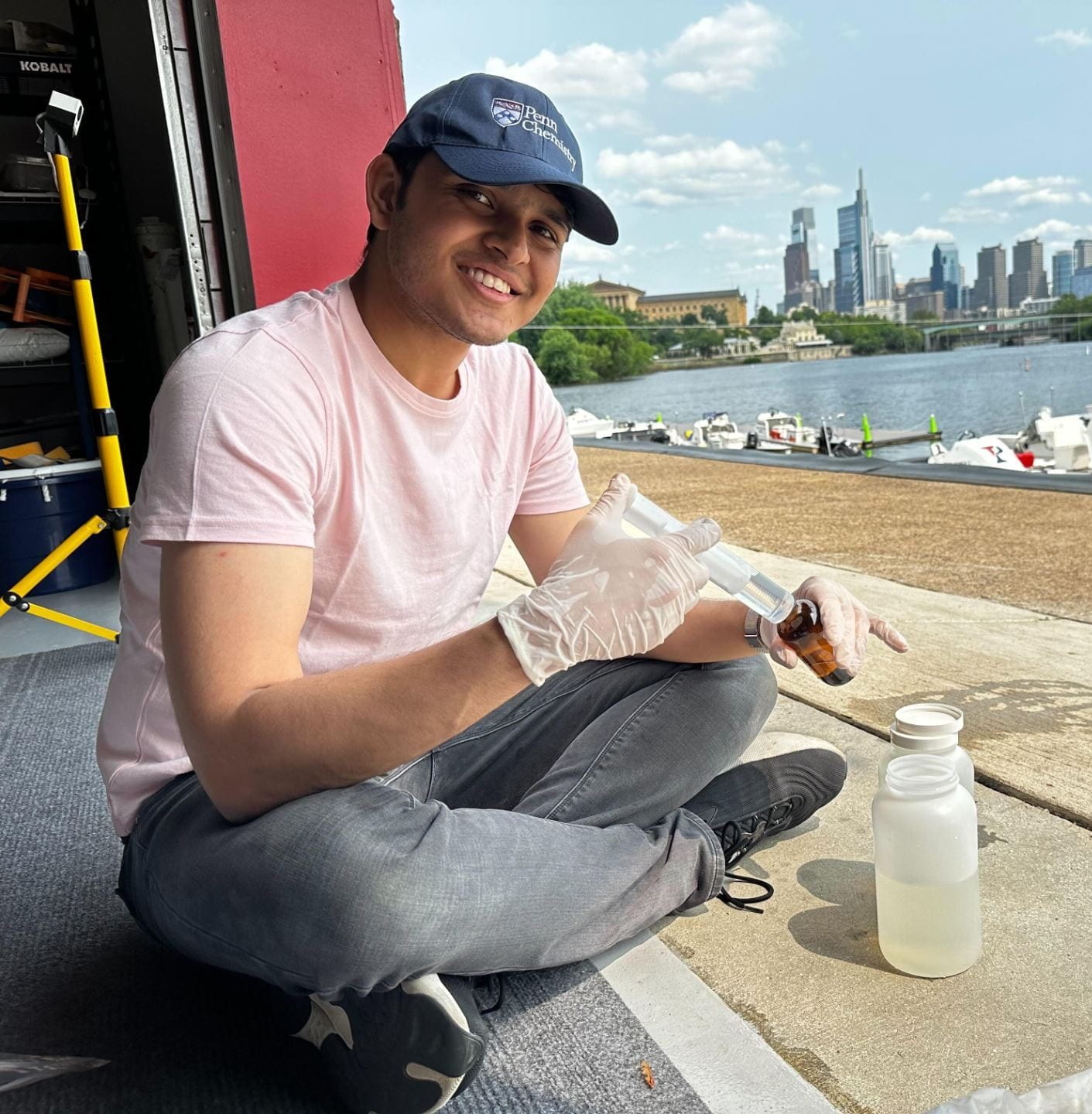
Neel is an enthusiastic and driven individual pursuing a Master of Chemical Sciences with a focus on Environmental Organic Chemistry at the University of Pennsylvania. With a passion for environmental research, he aims to contribute significantly to the development of sustainable solutions to pressing global challenges.
Neel’s academic journey commenced in 2018 with a Bachelor of Technology in Oils, Oleochemicals, and Surfactants Technology from the Institute of Chemical Technology in Mumbai, India. During his undergraduate studies, he engaged in a research project where he explored chemical depolymerisation of plastic PET through solvent-assisted Glycolysis Mechanisms. This experience reinforced his understanding of polymer chemistry, sustainable materials, and recycling technologies. During a brief period as a research intern in Godrej Chemicals LTD, his role was to formulate sustainable construction materials by leveraging my expertise in green oleochemicals and surface chemistry.
At the University of Pennsylvania, he has worked closely with Dr. Marsha I. Lester as an Independent Study Researcher during the spring of 2023 to synthesize and analyze the precursor of the Criegee Intermediate. His investigations delved into the mechanism of hydroxyl radical formation from alkenes in the troposphere, and he employed Quantum Mechanical Tunnelling to quantify the presence of these radicals. The theoretical calculations he conducted have considerable implications for atmospheric chemistry research.
In the BiClycles lab, his research revolved around analyzing trace metals in Philadelphia’s water sources. His main objective was to gather water samples from various urban watershed in the Philadelphia metro area and employ advanced analytical techniques to investigate seasonal fluctuations, weather influences, location-specific factors, and the intricate transport mechanisms of trace metals within these water bodies.
He is a member of UPenn’s Graduate and Professional Student Assembly. Beyond academic pursuits, he has discovered a newfound passion for coaching young kids from middle and high school, guiding and inspiring them to reach their full potential. During his leisure time, he indulges in diverse interests, including watching movies, exploring various cuisines, embarking on leisurely drives, and spending quality moments with friends.
Leah Hopf
Undergraduate Research Assistant
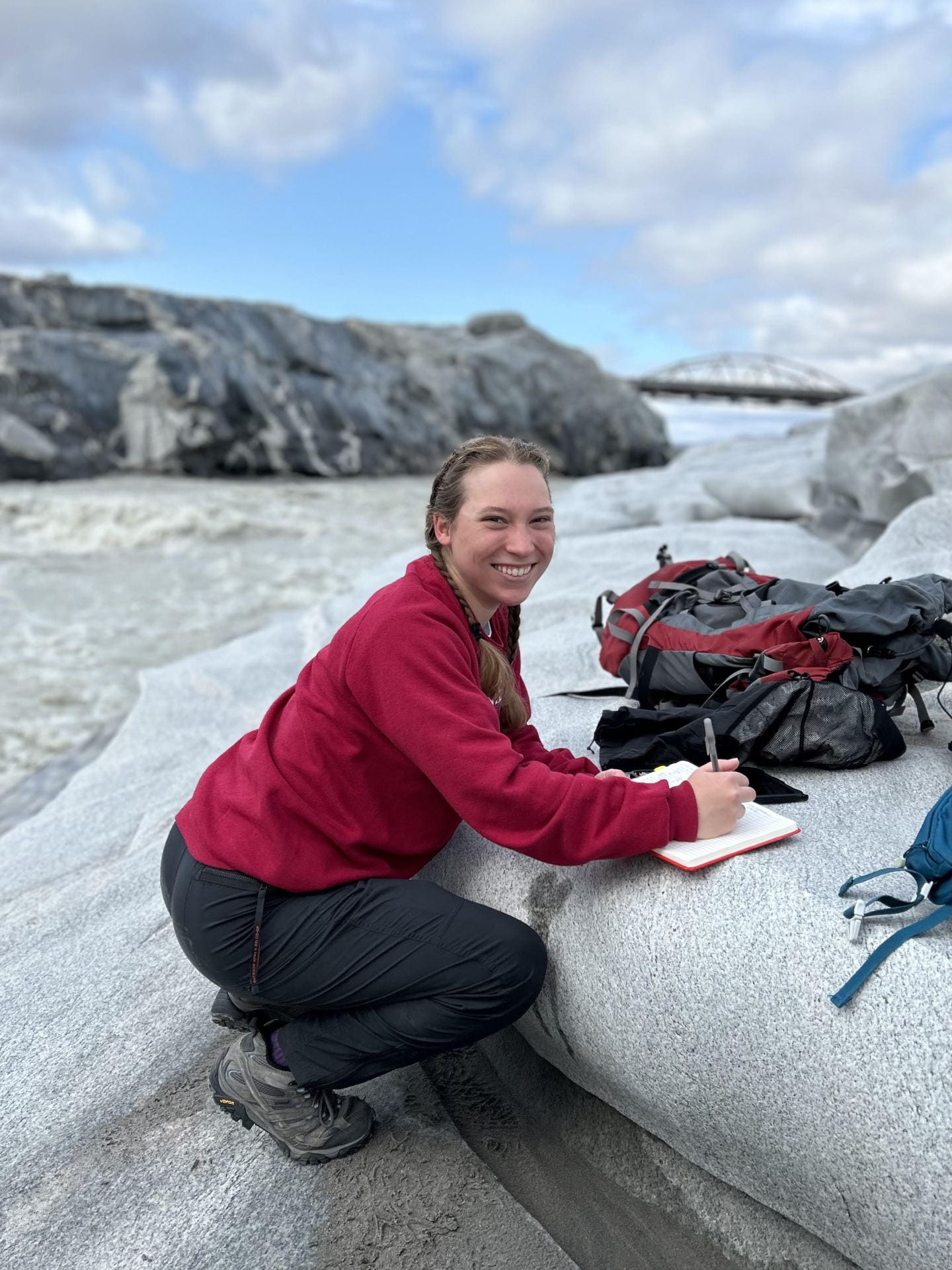
Leah was an undergraduate member of the BiCycles lab until she graduated in May 2025. She studied Earth Science at Penn. She first joined the lab in the summer of 2023 as part of a Penn Undergraduate Research Mentoring project, for which she assisted with the lab’s 2023 and 2024 field seasons in Greenland and spent the remainder of the summers working on iron and manganese sediment extractions. She graduated UPenn in 2025 and headed to Bristol, UK for the start of her PhD.

Margaux Cowles
Undergraduate Research Assistant
Dave McCabe (he/him)
Lab Technician
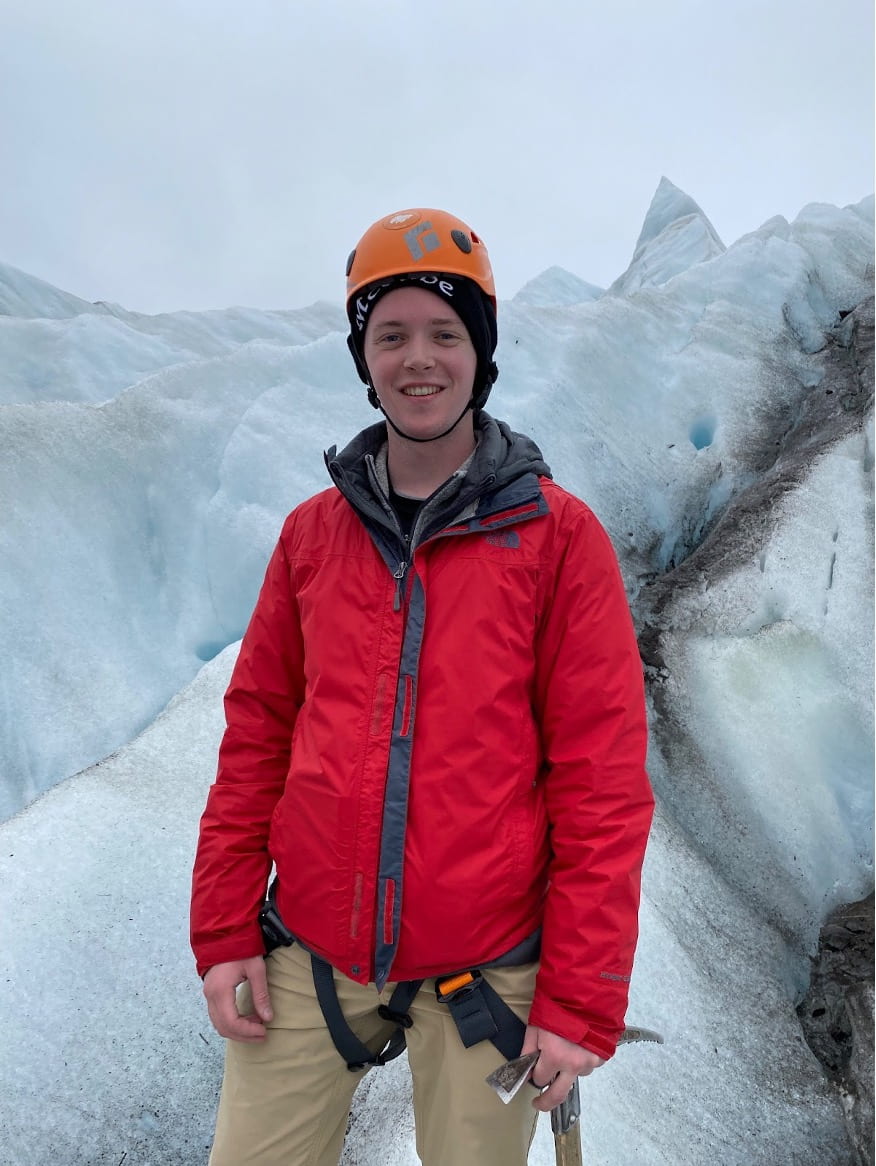
Dave is a Penn graduate from North Wales, Pennsylvania. He’s interested in everything there is to know about plants, rocks, rivers, and animals, which is why he chose to study Earth Science with a concentration in Environmental Science for his B.Sc. His coursework in the Earth Science Department has taken him from the fields of Kennett Square, PA to Iceland, where he first saw and fell in love with glaciers, and more recently Greenland as part of the BiCycles NSF project.
Dave began his research journey with Dr. Jane Dmochowski with her Urban Vegetation Community-Based Participatory Research Project. With Jane and through the Hayden Scholars Program, he has used remote sensing and watershed modeling to investigate how impervious surface cover impacts Cobbs Creek in West Philadelphia. Dave joined our lab for further analysis of Cobb’s Creek as he sought to understand toxic contaminant cycling in urban watersheds. After graduating UPenn, Dave worked as a laboratory technician in the BiCycles lab until May 2025.

SydneyBlu Garcia-Yao (they/them)
Research Assistant
SydneyBlu was an honorary member of the BiCycles lab during her high school years at Harriton High School in Bryn Mawr, Pennsylvania. First introduced to the Earth Sciences through their school’s Science Olympiad program, SydneyBlu became fascinated with freshwater and glacial systems. Then, after being selected to compete at the 2021 International Earth Science Olympiad, SydneyBlu worked with the rest of the US team to analyze microplastic levels in water systems across the country, sparking their interest in understanding environmental contaminants. Determined to learn more, SydneyBlu started researching the correlation between microplastics and coral mortality under Dr. Field at Penn’s Medical School and later presented this research at the National Junior Science and Humanities Symposium.
During the summer of 2022, SydneyBlu was an intern at the Environmental Biogeochemistry group at the Academy of Natural sciences, studying microplastics in the Delaware River Basin with the goal to create a model to predict concentrations based on environmental and anthropogenic factors.
Interested in the power of remote sensing as a research tool, at the Penn BiCycles Lab SydneyBlu has been working with QGIS and Google Earth Engine to quantify lake volumes in Greenland to better understand carbon fluxes.