
13 Wars and Transitions
From Reformation Rome to the Early Modern City
Several big, long-term trends:
- Italian wars: changes in the balance of power on Italian peninsula
- Growth of early modern states in Europe (including Rome)
- Reformation and changes across Europe in the roles of religious identity,
And locally: Rome continues to rebuild throughout all these changes
Italian peninsula: “Wars of Italy”
Last main phase: Francis I and Charles V
Francis I 1515 retakes Milan
1516 Charles inherits Spanish crown (HRE 1519: Charles V)
— French lose to HRE 1525
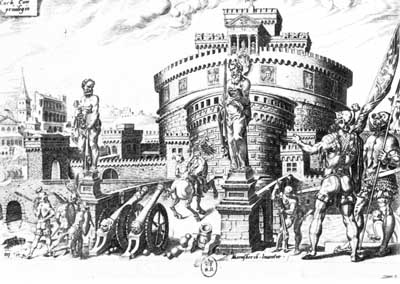
Sack of Rome 1527
Final phases of War:
- 1529 treaties (Barcelona and Cambrai):
- Spanish win title to Naples; end of French claims to Milan
- 1559 Treaty of Cateau-Cambrésis, 1559
- Spanish Habsburgs in much of Italy
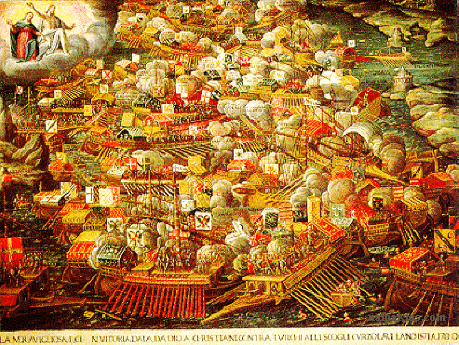
Lepanto 1571, near Gulf of Corinth
Holy league victory (Venice, Philip II of Spain, Pope Pius V) over Turks
Reformation: First two waves led by “Protestant” reformers, N. Europe
- Luther, Zwingli
- Calvin (French speaking)
Mixed set of reforms—theological, practice, ecclesiastical
- Lots of anti-Rome sentiment, imagery
- at first, no one assumed a schism; all assume reform for all Christendom
- Closing of monasteries—lands taken over by local ruler
- Iconoclasm–Calvinist regions
Early response: Hadrian VI (1522-23) hope for Erasmian reforms but died first
Rome and Reform
Paul III (1534-49) Alessandro Farnese
Did not initially seem a likely candidate for role he took on as reformer, rebuilder
- Palazzo Farnese begun 1517
- 1540 recognized Society of Jesus (Jesuits): Ignatius Loyola
- centralized under papacy, main church Gesù, begun 1568 (baroque)
- worldwide evangelism, including Protest Europ

- 1537 Reform commission; pressure for general council; delayed by civil unrest
Council of Trent: Council called 1542, met 1545-62 (sporadically)
- Ideal: all, including Proteestant reformers
- Anti-papal sentiment among reformers: papal legates no papal presence, not in Rome
- Effects of Council 1545–49, 1551–52 and 1562–63
Setting agendas: institutional versus doctrinal reform, regional versus centralized church
First session: Doctrine (1545-47)
Paul IV (1555-59) too hard-line to negotiate
Pius IV (1559-65) recalls council 1562
French support for resolution given succession crisis; reform of abuses
also Centralized Index, Inquisition
1564+ implementation
negotitation with rulers. Ex: Mary of England
1648 (Peace of Westphalia, ending 30 Years War) main end of wars of religion
Rome as head of “Catholic” Christendom
Rome’s non-Christian residents: Protestants, Jews
Ghetto of Rome 1555

Belvedere

Villa Belvedere begun 1484 (Innocent VII)Antonio Pollaiuolo
Julius II: sculpture collection in courtyard
1506 ca: Donato Bramante commissioned to design a link between Villa and Vatican Palace
1565 Pirro Ligorio adds 3rd story, niche
1585 “new wing” of Vatican Library added
1608 Pigna moved to Cortile